Care guide · Advanced
Caridina shrimp care guide
Caridina cantonensis and relatives
How to keep soft-water Caridina shrimp such as Crystal Red, Black Galaxy BOA and Blue Snowflake: RO water, active soil, stable parameters, feeding and breeding.
Updated 10 November 2026 · 8 min read
In short
Caridina shrimp such as Crystal Red, Galaxy BOA and Blue Snowflake need soft, acidic, very stable water: RO water remineralised to GH 4–6 and KH 0–1, an active soil holding pH 5.5–6.8, and a cool 20–23 °C. Cycle the tank for four to six weeks first, and make small, matched water changes.
About Caridina shrimp
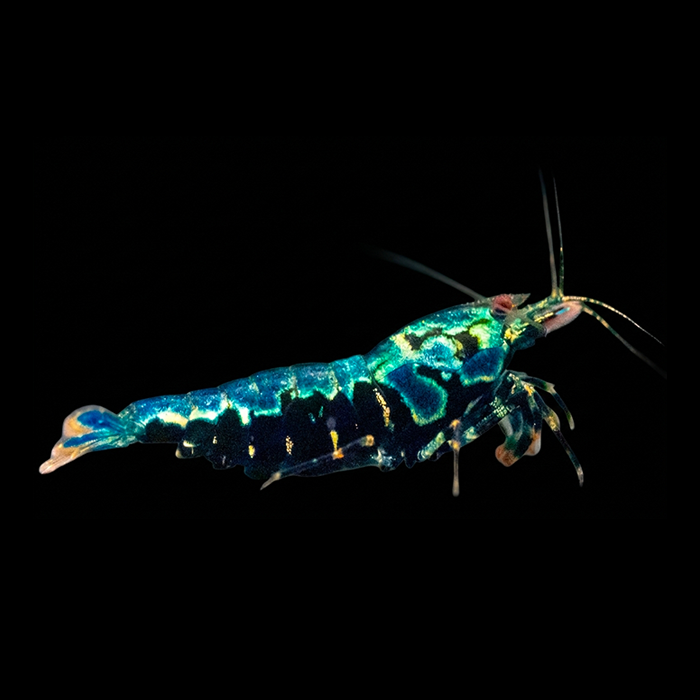
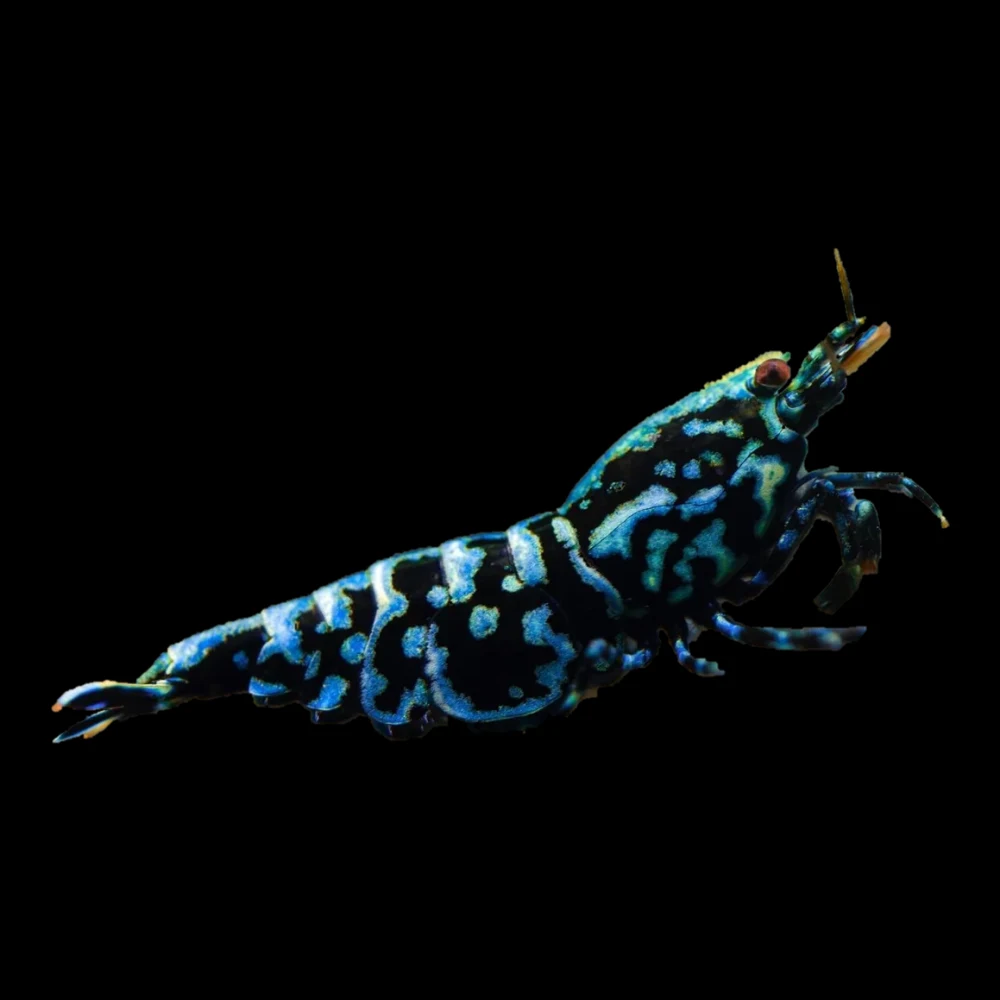
Crystal Red, Black Galaxy BOA and Blue Snowflake shrimp are soft-water Caridina, bred over decades for their colour and pattern. They are more demanding than Neocaridina, but in a stable, well-set-up tank they are just as easy to keep and breed.
The secret is consistency. Caridina cope with almost anything except sudden change.
Water
UK tap water is usually too hard. Most keepers use RO (reverse osmosis) water and add a GH-only shrimp mineral to reach GH 4–6 with KH at 0–1. A TDS meter makes this easy: around 100–150 ppm after remineralising is a good target.
Keep the temperature cool and steady at 20–23 °C. Above 25 °C, Caridina become stressed and stop breeding, so a fan or a cool room helps in summer.
Tank set-up
- An active, buffering shrimp soil, which holds the pH down at about 5.5–6.8.
- Cycle until both ammonia and nitrite read zero. New active soils release ammonia for the first few weeks, so allow four to six weeks before adding shrimp.
- A sponge filter or a sponge pre-filter on the intake.
- Moss, leaves (Indian almond, alder cones) and low-light plants for grazing and cover.
- A tank of 30 litres or more. Larger volumes are more stable.
Water changes
Change about 10% weekly using RO water remineralised to the same TDS as the tank, at the same temperature. Pour or drip it in slowly. Big or mismatched water changes are the most common cause of failed moults and sudden losses.
Top up evaporation with plain RO water, not remineralised water, or the TDS will creep up over time.
Feeding
Feed small amounts every day or two: a quality Caridina food, plus occasional blanched vegetables and leaf litter. Take out anything left after a couple of hours. A hungry shrimp tank is a healthy one.
Breeding and grading
Berried females carry their eggs for about a month, and the young hatch as miniature shrimp. In a stable tank, colonies grow steadily.
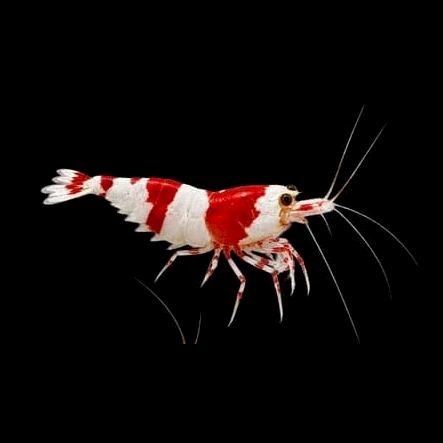
Crystal Reds are graded by how much solid white they show, from C grade up to SSS. Pattern lines such as Galaxy BOA and Snowflake are prized for their colour and the density of their markings.
Caridina cantonensis types can cross-breed with each other, so keep lines separate if you want offspring that look like their parents. They do not cross with Neocaridina, although the two need different water and are rarely kept together.
Bringing your shrimp home
- Float the bag to match the temperature, then drip-acclimatise very slowly, over two to three hours, until the bag water matches your tank’s TDS.
- Keep the lights low and do not feed on the first day.
- Expect them to hide while they settle, and avoid water changes for the first week.
Water parameters
| Temperature | 20–23 °C (24 °C max) |
|---|---|
| pH | 5.5–6.8 |
| GH | 4–6 |
| KH | 0–1 |
| TDS | 100–150 ppm |
| Ammonia / nitrite | 0 ppm |
| Nitrate | Below 20 ppm |
What to look for
- Pick shrimp that are actively grazing, with even colour and no cloudy or milky patches.
- Pattern grades: for Crystal Reds, more solid white means a higher grade (S, SS, SSS).
- Galaxy and Snowflake patterns vary from shrimp to shrimp, so no two look quite the same.
Tank mates at a glance
Good choices
- ✓ Nerite snails
- ✓ Other Caridina of the same line (to keep the line pure)
- ✓ Moss and leaf litter, not fish
Avoid
- ✕ All fish, if you want the colony to grow
- ✕ Neocaridina in the same tank (different water needs)
- ✕ Different Caridina lines, if you want offspring true to type
Care routine
- Daily
- Check the temperature, especially in summer.
- Feed sparingly every day or two.
- Weekly
- Change about 10% with RO water remineralised to the tank’s TDS, at the same temperature, added slowly.
- Top up evaporation with plain RO water only.
- Check TDS, pH and nitrate.
- Monthly
- Squeeze the sponge filter in removed tank water.
- Add fresh leaf litter as the old breaks down.
- Every 12–18 months
- Active soil slowly loses its buffering. Watch for pH creeping up, and plan a gradual soil replacement.
Health problems to watch for
Failed moults
Signs: Shrimp stuck mid-moult, or a white ring around the body.
What to do: Usually a GH mismatch or large water changes. Remineralise to a steady GH and keep changes small.
Sudden losses
Signs: Several shrimp dying over a few days.
What to do: Test for ammonia and nitrite (new soil leaches ammonia), check the temperature, and look for anything new added to the tank.
Not breeding
Signs: Adults healthy, but no berried females.
What to do: Keep the temperature at 20–23 °C, the TDS steady, feed a varied diet with some protein, and be patient: a new colony can take months.
Common questions
Can Crystal Red Shrimp live in tap water?
Not usually in the UK. Most tap water is too hard, so Caridina keepers use RO water remineralised with a GH-only shrimp mineral.
What TDS should a Caridina shrimp tank have?
Around 100–150 ppm after remineralising RO water to GH 4–6 with KH at 0–1 is a good target. Keep it steady rather than chasing an exact number.
Do Caridina shrimp need active soil?
In practice, yes. An active, buffering soil holds the pH down at about 5.5–6.8, which these shrimp need. New soil releases ammonia, so cycle the tank for four to six weeks first.
What temperature do Crystal Red Shrimp need?
Keep them cool and stable at 20–23 °C. Above about 25 °C they become stressed and stop breeding.
Can Crystal Red Shrimp live with cherry shrimp?
They will not cross-breed, but they need different water: Caridina want soft, acidic water and Neocaridina prefer harder, more neutral water. It is better to keep them in separate tanks.
What do Crystal Red Shrimp grades mean?
Crystal Reds are graded by how much solid white they show, from C grade at the low end up to S, SS and SSS at the top.