Care guide · Easy
Neocaridina shrimp care guide
Neocaridina davidi
How to keep Neocaridina shrimp such as Painted Red Fire, Yellow Rili and Blue Caesar: water, tank set-up, feeding, breeding and keeping colours true.
Updated 10 November 2026 · 7 min read
In short
Neocaridina shrimp are hardy and easy to keep: a cycled, mature tank of 20 litres or more, dechlorinated tap water at 20–26 °C and pH 6.5–8.0, a sponge filter, plants or moss, and small amounts of food. Avoid copper and sudden water changes, and keep one colour per tank to keep the colour true.
About Neocaridina shrimp
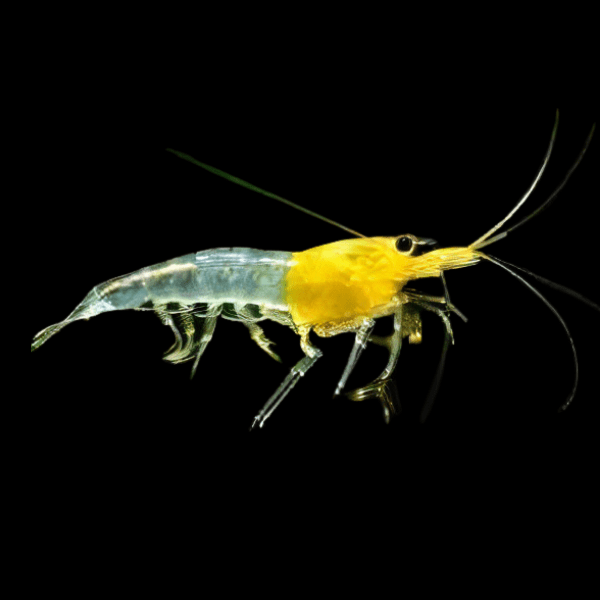
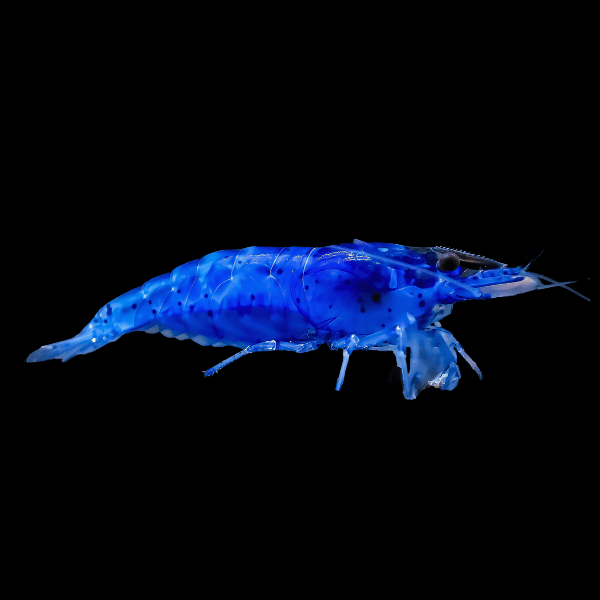
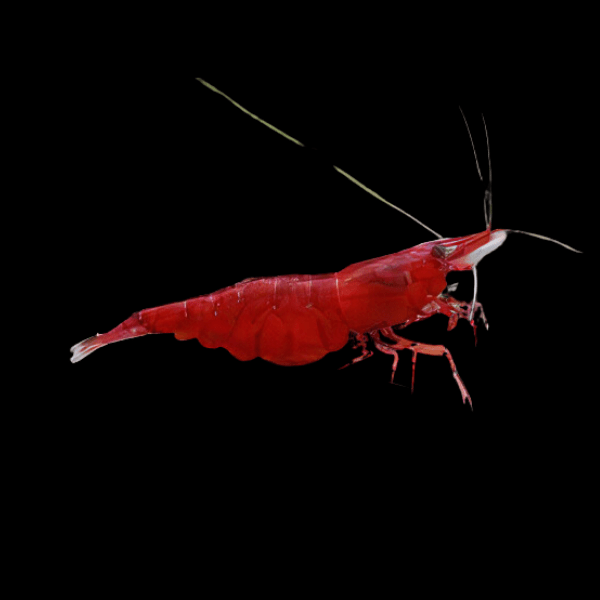
Neocaridina davidi is the hardy, colourful dwarf shrimp behind cherry, yellow, blue and many other colour lines. Our Painted Red Fire, Yellow Rili and Blue Caesar shrimp are all colour forms of this one species.
They are a great first shrimp: tolerant of a wide range of water, busy all day, and they breed readily in a settled tank.
Tank set-up
- A fully cycled tank of 20 litres or more that has been running for at least a few weeks, so there is biofilm for them to graze.
- A sponge filter, or a sponge pre-filter over the filter intake, so baby shrimp are not sucked in.
- Plants and moss (java moss, Christmas moss, floating plants) for grazing and hiding, especially after moulting.
- Any shrimp-safe substrate. Plain inert gravel or sand is fine.
Water
Most UK tap water works once dechlorinated. Aim for 20–26 °C, pH 6.5–8.0 and moderately hard water (GH around 6–10, KH 2–6).
The two big dangers are copper and sudden change. Many fish medicines and some plant fertilisers contain copper, which is deadly to shrimp. Do small weekly water changes of 10–20% rather than large ones, and match the temperature.
Feeding
In a mature tank, shrimp spend most of the day grazing biofilm and algae. Add a small pinch of shrimp food or a piece of blanched spinach or courgette every day or two, and remove leftovers after a couple of hours. Overfeeding is the most common way to lose shrimp.
Moulting
Shrimp shed their shells regularly as they grow. Leave the empty moult in the tank, as they will eat it to recycle minerals. Repeated failed moults (a shrimp stuck half out of its shell) usually point to water that is too soft or to big swings between water changes.
Breeding and keeping colours true
A female carrying eggs under her tail is “berried”. She carries them for three to four weeks, and the babies hatch as tiny, fully formed shrimp with no larval stage.
All Neocaridina colours can cross-breed, and mixed colonies drift back towards brown, wild-type colouring over a few generations. If you want to keep a colour line, keep one colour per tank. Neocaridina do not cross with Caridina shrimp such as Crystal Reds.
Tank mates
Snails, otocinclus and other shrimp are ideal. Most fish will eat baby shrimp and many will eat adults, so if you want a colony to grow, a shrimp-only tank is best. Very small, peaceful fish such as chili rasboras are a reasonable compromise in a well-planted tank.
Bringing your shrimp home
- Float the bag to match the temperature, then drip-acclimatise slowly over one to two hours.
- Shrimp are more sensitive to sudden changes in water than most fish, so take your time.
- Move them over with a net or a spoon and keep the bag water out of the tank.
Water parameters
| Temperature | 20–26 °C |
|---|---|
| pH | 6.5–8.0 |
| GH | 6–10 |
| KH | 2–6 |
| TDS | About 150–250 ppm |
| Ammonia / nitrite | 0 ppm |
| Nitrate | Below 20 ppm |
What to look for
- Active shrimp that graze constantly are healthy shrimp.
- Colour can look paler after shipping or on a light background; it deepens once they settle on a dark substrate.
- Start with ten or more for a good mix of males and females. Females are larger, rounder and more colourful.
Tank mates at a glance
Good choices
- ✓ Snails such as nerites and ramshorns
- ✓ Otocinclus
- ✓ Very small, peaceful fish such as chili rasboras (some shrimplets may be eaten)
- ✓ Other shrimp of the same colour
Avoid
- ✕ Most fish, which will eat shrimplets and sometimes adults
- ✕ Other Neocaridina colours, if you want to keep a colour line
- ✕ Crayfish and large shrimp
Care routine
- Daily
- Check the temperature and that everyone is moving and grazing.
- Feed a small amount every day or two, and take out leftovers after a couple of hours.
- Weekly
- Change 10–20% of the water with temperature-matched water, added slowly.
- Test ammonia, nitrite and nitrate, plus GH/KH (and TDS for Caridina).
- Top up evaporation.
- Monthly
- Squeeze the sponge filter out in removed tank water, never under the tap.
- Trim plants and moss, and check the intake sponge for trapped shrimplets.
Health problems to watch for
Failed moults
Signs: Shrimp stuck in their old shell, sometimes with a white ring around the middle.
What to do: Check GH is around 6–10 and avoid big swings between water changes.
Deaths after a water change
Signs: Several shrimp lost within a day or two.
What to do: Change less water at once, match the temperature and add it slowly.
Pests: planaria and hydra
Signs: Small white flatworms or tiny tentacled polyps on the glass.
What to do: Feed less, and use a shrimp-safe trap or treatment.
Common questions
Are cherry shrimp good for beginners?
Yes. Neocaridina such as cherry, yellow and blue shrimp are among the easiest shrimp to keep, provided the tank is cycled and mature before they go in.
Can Neocaridina shrimp live in tap water?
Usually yes. Most UK tap water is suitable once dechlorinated, as long as it sits around pH 6.5–8.0 and is moderately hard (GH 6–10).
Can I mix different colours of Neocaridina shrimp?
You can, but they will cross-breed and their young gradually revert to brown, wild-type colouring. Keep one colour per tank to keep a line true.
How many Neocaridina shrimp should I start with?
Start with a group of ten or more. Shrimp feel safer in numbers, and a larger group gives a good mix of males and females for breeding.
What kills aquarium shrimp?
The most common causes are copper (in some medicines and fertilisers), an uncycled tank, overfeeding and large or sudden water changes.
How often do shrimp breed?
In a settled tank, a female carries eggs for three to four weeks and can become berried again soon after the young hatch.