Care guide · Moderate
Zebra pleco care guide
Hypancistrus zebra · L046
How to keep zebra plecos (Hypancistrus zebra, L046): tank set-up, warm fast-flowing water, a meaty diet, tank mates, sexing and breeding.
Updated 10 November 2026 · 9 min read
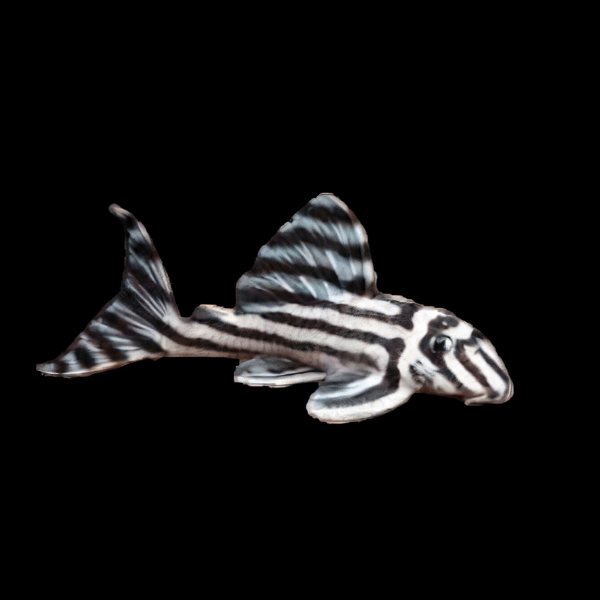
In short
Zebra plecos need warm (26–30 °C), clean, fast-flowing and well-oxygenated water, a rocky tank (60 × 30 cm base for one or two, 80 cm+ for a group) with a cave for each fish, and a mostly meaty diet such as bloodworm, mysis and high-protein sinking pellets. They are peaceful, shy and can live for 10–15 years or more.
About the zebra pleco
The zebra pleco is a small, slow-growing catfish from a short stretch of the Rio Xingu in Brazil, where it lives among rocks in warm, fast, oxygen-rich water. Its crisp black-and-white stripes make it one of the most sought-after fish in the hobby.
Brazil banned wild exports in 2004, so most zebras kept today are captive-bred. They are peaceful, a little shy, and long-lived, so a zebra is a fish you plan around rather than an impulse buy.
Tank set-up
Think “rocky river bed”, not “planted community tank”. A tank with a base of 60 × 30 cm suits one or two zebras; for a group, go for 80 cm or longer (around 100 litres). Floor space matters more than height, because zebras spend their time on the bottom.
- Plenty of caves: slate stacks, rock piles or purpose-made clay pleco caves. Give at least one cave per fish so males do not squabble.
- Sand or smooth fine gravel. Bare-bottom tanks work too.
- Strong water movement and lots of oxygen. Add a powerhead or an air stone alongside the filter, because warm water holds less oxygen.
- Dim lighting or plenty of shade. Hardy plants such as anubias and java fern tied to rocks cope with the warmth.
- A tight lid. Plecos are not jumpers, but tank mates may be.
Water
Keep the water warm, clean and moving: 26–30 °C, pH 6.0–7.5, soft to moderately hard. Stability matters more than chasing exact numbers.
Zebras are sensitive to nitrate and to low oxygen. Change 25–30% of the water every week with temperature-matched, dechlorinated water, and keep the filter well maintained.
Feeding
Zebras are not algae eaters and do not rasp wood. In the wild they eat small invertebrates, so their diet should lean meaty.
- Frozen bloodworm, mysis, brine shrimp and chopped krill.
- High-protein sinking pellets or wafers made for carnivorous plecos.
- Feed in the evening or shortly after lights out, when they are most active.
- Remove anything uneaten after a few hours so it does not foul the water.
Tank mates
Choose calm fish that are happy in warm water and will not race the zebras to food on the bottom. Small peaceful tetras that tolerate 27–28 °C, such as rummy-nose tetras, or dwarf cichlids like Apistogramma make good companions.
Avoid boisterous bottom-dwellers and large plecos that dominate caves and food. Do not keep zebras with other Hypancistrus species: they can cross-breed, and hybrids muddy the lines that breeders work hard to keep pure.
Telling males from females
Adult males have broader heads and grow longer bristle-like odontodes on the cheeks and the first ray of the pectoral fins. Females look rounder across the body when viewed from above, especially when carrying eggs. Sexing young fish reliably is difficult until they are a few years old.
Breeding
Zebras are cave spawners. A male claims a snug cave and the female lays a small clutch of large eggs inside, typically seven to fifteen. The male guards and fans them. Breeders usually keep two or three females per male, starting from a group of six or more.
The eggs hatch after about a week. The fry stay in the cave while they absorb their yolk sacs, then need fine foods such as microworm or newly hatched brine shrimp, moving on to crushed meaty foods as they grow. Spawning is often triggered by large water changes and strong flow, which mimic the rainy season.
Bringing your zebras home
- Turn the tank lights off and float the bag for 15–20 minutes to match the temperature.
- Add small amounts of tank water to the bag over 30–45 minutes, or drip-acclimatise.
- Net the fish into the tank. Do not pour the bag water in.
- Leave the lights off for the rest of the day. Expect them to hide for a few days while they settle.
Water parameters
| Temperature | 26–30 °C (28 °C is a good target) |
|---|---|
| pH | 6.0–7.5 |
| Hardness | 2–15 dGH; soft to medium |
| Ammonia / nitrite | 0 ppm |
| Nitrate | Below 20 ppm |
| Flow and oxygen | Strong flow, high oxygen |
What to look for
- Look for a rounded, full belly when viewed from above. A sunken belly means the fish has been underfed.
- Stripes should be crisp black and white, with clear, undamaged fins.
- Healthy zebras cling firmly to surfaces and hide. Avoid fish lying on their side or breathing rapidly.
- Ours are juveniles of about 5 cm, which settle in more easily than adults and grow into their colours.
Tank mates at a glance
Good choices
- ✓ Rummy-nose tetras and other peaceful mid-water fish that like 27–28 °C
- ✓ Apistogramma and other small, calm dwarf cichlids
- ✓ Hatchetfish and similar top-dwellers
- ✓ Other zebras, given a cave each
Avoid
- ✕ Other Hypancistrus species (risk of hybrids)
- ✕ Large or boisterous plecos and catfish
- ✕ Busy bottom-feeders such as loaches that beat them to food
- ✕ Fish that need cool water, such as goldfish or white cloud minnows
Care routine
- Daily
- Check the temperature: zebras need it warm, but above 31 °C oxygen drops quickly.
- Feed in the evening, after lights out.
- Twice a week
- Remove uneaten meaty food from caves and corners before it fouls the water.
- Weekly
- Change 25–30% of the water with temperature-matched, dechlorinated water.
- Test ammonia, nitrite and nitrate.
- Monthly
- Clean filter media in removed tank water and check the powerhead or air stone is running freely.
Health problems to watch for
Underfeeding
Signs: A hollow, sunken belly; fish out in the open looking for food.
What to do: Feed meaty foods after lights out, target-feed near the caves, and make sure tank mates are not taking it all.
Low oxygen
Signs: Rapid gill movement, fish resting near the surface or the filter outlet.
What to do: Add an air stone or powerhead and check the temperature is not creeping too high.
Poor water quality
Signs: Clamped or frayed fins, colours fading to grey, lethargy.
What to do: Test the water, do a water change and increase routine changes. Zebras do badly in nitrate-heavy water.
Constant hiding
Signs: Rarely seen, especially in the first few weeks.
What to do: This is normal for zebras. Dim lighting and a cave each will help them come out more, especially in the evening.
Common questions
How big do zebra plecos get?
Zebra plecos grow to about 8 cm, which makes them one of the smaller plecos. They grow slowly and can take several years to reach full size.
What temperature do zebra plecos need?
Keep zebra plecos at 26–30 °C. Because warm water holds less oxygen, add strong flow and extra aeration.
What do zebra plecos eat?
Zebra plecos are mainly carnivorous. Feed frozen bloodworm, mysis, chopped mussel or prawn and high-protein sinking pellets, ideally in the evening. They rarely eat vegetable foods and do not eat algae or wood.
Can zebra plecos live in a community tank?
Yes, with calm fish that like warm water, such as rummy-nose tetras or Apistogramma. Avoid boisterous bottom-dwellers and other Hypancistrus species, which can cross-breed with them.
How many zebra plecos should I keep?
One or two can live in a tank with a 60 × 30 cm base. A group of three or more needs 80 cm or longer, with a cave for each fish; breeders usually start with six.
How long do zebra plecos live?
With good care, zebra plecos commonly live 10–15 years, and sometimes longer.
Why are zebra plecos so expensive?
Brazil banned wild exports in 2004, and zebras breed slowly, laying small clutches of around seven to fifteen eggs. Most fish sold today are captive-bred, which takes time and skill.